Kai was ready for Kindergarten, I wasn’t
*Es español esta más abajo.
One thing I never realized is that, as a parent, I would go through a bunch of “first times” right alongside Kai.
This year has been a roller coaster. I think Kai was more ready to tackle kindergarten than I was ready to be a kindergarten parent. There were more than a handful of times when I asked myself, Am I doing this right? Mostly, that came from the fear every parent knows too well: the fear of messing up your own kid.
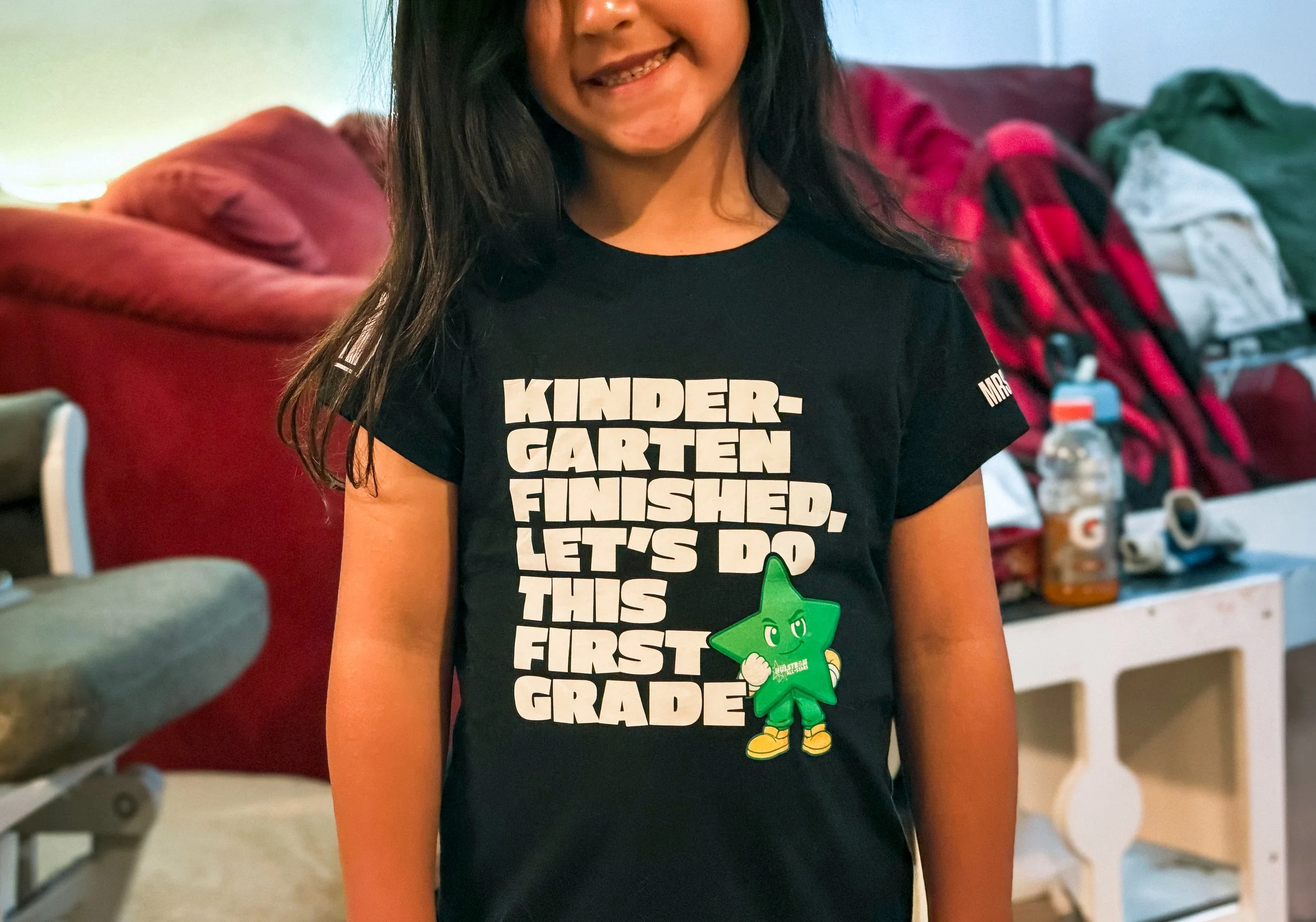
We were lucky to be guided toward this school and toward our teacher for the year, Mrs. S. I have to be honest: it was a bit intimidating at the beginning. I felt like Kai was being graded, but somehow we, the parents, were being graded too.
I always thought, and still think a little, that school is mostly daycare until the last years of high school. But now I understand that it is in this “daycare” where some of the most important foundations are formed: learning how to navigate the world, how to be part of a group, and how to become a social being.
So I wanted to share my five learnings as a kindergarten parent. These are the things I wish I could go back in time and tell myself.
1. Everyone needs grace.
As you are trying to survive the workweek and make it to the weekend, where maybe you can sneak in a little nap, other parents are doing the same.
Yes, logic and expectations say, “They should have taught that at home.” Maybe they did. Maybe the kid forgot. Maybe they didn’t. Manners, saying thank you, sharing, listening—kids are still learning.
The one thing I kept reminding myself is that everyone needs grace. Your child’s classmates need it. Their parents need it. The teacher needs it. And, honestly, you need it too.
2. It is teamwork.
At the beginning of the year, something happened at school, and by pickup time our son had been holding it in all day. The moment Kai saw Mom, the tears and pain came pouring out.
I was shocked, with a sprinkle of anger. I wanted to kick the board, take him out of school, and be done with the entire educational system by day two.
We reached out to a friend who has been a teacher for a long time and shared our concerns. I will never forget what she said. It was obvious, but deep: “You, the parents, the school, the teachers—you are all a team for Kai and for his development.”
That changed my perspective.
It wasn’t just, “They should do better.” I began to understand that what we do at home reflects in the classroom, and what happens in the classroom comes back home. We all have our hands full with life, but we all want the best for the child.
Throughout the year, I kept asking myself, “What can I do at home that would help Mrs. S at school?”
3. Kids need time to digest life.
As parents, we are so ready to hear all the stories and adventures from school. Then pickup comes and—bam—there is silence, grumpiness, or only a few words.
It can feel like they are angry or like something bad happened. And, of course, our parent brains can fly into every possible scenario.
But sometimes the truth is simple: your child’s brain is still digesting everything that happened that day.
Unless something was painful or very important to them, it may not come up right away. But then, at bedtime, you suddenly hear who is the fastest in class, what everyone’s bedtime routine is, who got in trouble, or what funny thing happened at lunch.
Be patient. And most importantly, do your best to remember what your child shares with you, because it matters to them.
4. Don’t overfeed.
This one didn’t make sense to me until almost the end of the year, especially because I did not attend school here in the United States.
Lunch and snack time, especially in kindergarten, are not just about eating. They are also a time to socialize.
I would send a lunchbox full of food, and when it came back unfinished, I would get frustrated. Does Kai not like this? Does it not taste good?
But then I realized that he was talking and engaging with his friends at lunch. He had to choose between eating everything or enjoying that time with the guys at the table, because lunch goes by fast.
By sending too much food, I was unintentionally making it harder for him to enjoy that social time.
You have to do some trial and error to find the right amount of food—enough to keep your kid fed, but not so much that it takes away from being part of the table.
5. Be a volunteer.
I noticed that kids get excited to see their parents in “no parents” settings.
Life is busy, and schedules are hard, but do your best to volunteer when you can. Join a field trip. Help in the classroom. Take any chance you have to be around.
It is win, win, win, and win.
Your child gets to introduce you to their friends, which feels amazing. You get to meet the classmates and finally put faces to the stories you hear at home. You get to see who the best friends are. And you get a front-row seat to watch your child interact with the world without you necessarily guiding every step.
It is a little taste of their independence.
In our family, Kai spends more time with Mom, but no one can take away the one-on-one memories Kai and I made during our field trip to the Denver Stock Show. Yee-haw!
I have one more learning, but I will save it for another post: label everything with your kid’s name.
Kai tackled kindergarten like a boss. And now the three of us will experience first grade together—for the first time.
Keep us in your thoughts.
D.
Kai estaba listo para Inicial, yo no
Una cosa de la que nunca me había dado cuenta es que, como papá, yo también iba a vivir un montón de “primeras veces” junto con Kai.
Este año ha sido una montaña rusa. Creo que Kai estaba más listo para enfrentar el kínder de lo que yo estaba listo para ser papá de un niño en kínder. Más de una vez me pregunté: ¿Lo estoy haciendo bien? Y, en el fondo, casi siempre venía de ese miedo que todo papá conoce muy bien: el miedo de meter la pata y afectar a tu propio hijo.
Tuvimos la suerte de llegar a esta escuela y de tener como maestra este año a la Mrs. S. Tengo que ser honesto: al comienzo fue un poco intimidante. Sentía que no solo estaban evaluando a Kai, sino que de alguna manera también nos estaban evaluando a nosotros como papás.
Siempre pensé, y todavía lo pienso un poquito, que la escuela es básicamente una guardería hasta los últimos años de secundaria. Pero ahora entiendo que es en esta “guardería” donde se forman algunas de las bases más importantes: aprender a moverse en el mundo, ser parte de un grupo y convertirse en un ser social.
Así que quiero compartir cinco cosas que aprendí como papá de un niño en kínder. Son cosas que me hubiera gustado poder decirme a mí mismo al comienzo del año.
1. Todos necesitamos gracia.
Mientras tú estás tratando de sobrevivir la semana de trabajo y llegar al fin de semana, donde tal vez puedas dormir una siestita, los otros papás están haciendo lo mismo.
Sí, la lógica y las expectativas dicen: “Eso se lo debieron enseñar en casa”. Tal vez sí se lo enseñaron. Tal vez el niño se olvidó. Tal vez no se lo enseñaron. Modales, decir gracias, compartir, escuchar… los niños todavía están aprendiendo.
Algo que tuve que repetirme durante el año es que todos necesitamos gracia. Los compañeros de tu hijo la necesitan. Sus papás la necesitan. La maestra la necesita. Y, siendo honestos, tú también la necesitas.
2. Es un trabajo en equipo.
Al comienzo del año pasó algo en la escuela, y para la hora de recogerlo, nuestro hijo había estado aguantándose todo el día. En el momento en que Kai vio a su mamá, las lágrimas y el dolor salieron de golpe.
Yo estaba en shock, con una pizca de enojo. Quería patear el tablero, sacarlo de la escuela y dar por terminado todo el sistema educativo desde el segundo día de clases.
Hablamos con una amiga que ha sido maestra por muchos años y le contamos nuestras preocupaciones. Nunca me voy a olvidar de lo que nos dijo. Era algo obvio, pero profundo: “Ustedes, los papás, la escuela, los maestros, todos son un equipo para Kai y para su desarrollo”.
Eso cambió mi perspectiva.
No era simplemente decir: “Ellos deberían hacerlo mejor”. Empecé a entender que lo que hacemos en casa se refleja en el salón, y lo que pasa en el salón también llega a la casa. Todos tenemos la vida llena de responsabilidades, pero todos queremos lo mejor para el niño.
Durante el año, me encontré muchas veces preguntándome: “¿Qué puedo hacer en casa que ayude a la Mrs. S en la escuela?”
3. Los niños necesitan tiempo para digerir la vida.
Como papás, estamos listos para escuchar todas las historias y aventuras de la escuela. Pero llega la hora de recogerlos y, de pronto, nada: silencio, mal humor o apenas unas cuantas palabras.
Puede sentirse como si estuvieran molestos o como si algo malo hubiera pasado. Y claro, nuestra mente de papás se va volando a todos los escenarios posibles.
Pero a veces la verdad es más simple: el cerebro de tu hijo todavía está digiriendo todo lo que pasó ese día.
A menos que algo haya sido doloroso o muy importante para ellos, tal vez no lo cuenten de inmediato. Pero luego, a la hora de dormir, de la nada te cuentan quién es el más rápido de la clase, cuál es la rutina de dormir de cada uno, quién se metió en problemas o qué cosa graciosa pasó en el almuerzo.
Ten paciencia. Y, sobre todo, haz tu mejor esfuerzo por recordar lo que tu hijo te cuenta, porque para él es importante.
4. No mandes demasiada comida.
Esto no me hizo sentido hasta casi el final del año, especialmente porque yo no fui a la escuela aquí en Estados Unidos.
La hora del almuerzo y del snack, especialmente en kínder, no es solo para comer. También es un momento para socializar.
Yo mandaba una lonchera llena de comida, y cuando regresaba sin terminar, me frustraba. ¿A Kai no le gusta esto? ¿No le sabe bien?
Pero después me di cuenta de que estaba conversando y compartiendo con sus amigos durante el almuerzo. Tenía que escoger entre comerse todo o disfrutar ese momento con los chicos de la mesa, porque la hora del almuerzo se pasa rápido.
Al mandarle demasiada comida, sin querer, le estaba haciendo más difícil disfrutar ese tiempo social.
Hay que probar hasta encontrar la cantidad correcta de comida: suficiente para que tu hijo esté bien alimentado, pero no tanta que le quite la oportunidad de ser parte de la mesa.
5. Sé voluntario.
Me di cuenta de que a los niños les emociona ver a sus papás en lugares donde normalmente no hay papás.
La vida es ocupada y los horarios son difíciles, pero haz tu mejor esfuerzo por ser voluntario cuando puedas. Acompaña en una visita escolar. Ayuda en el salón. Aprovecha cualquier oportunidad que tengas para estar presente.
Es ganar, ganar, ganar y ganar.
Tu hijo puede presentarte a sus amigos, y eso se siente increíble. Tú puedes conocer a sus compañeros y por fin ponerle cara a las historias que escuchas en casa. Puedes ver quiénes son sus mejores amigos. Y puedes tener un asiento de primera fila para ver a tu hijo interactuar con el mundo sin que tú necesariamente estés guiando cada paso.
Es una pequeña muestra de su independencia.
En nuestra familia, Kai pasa más tiempo con mamá, pero nadie me va a quitar los recuerdos uno a uno que Kai y yo hicimos durante nuestra visita escolar al Denver Stock Show. ¡Yee-haw!
Tengo un aprendizaje más, pero lo voy a guardar para otro post: etiqueta todo con el nombre de tu hijo.
Kai enfrentó el kínder como un campeón. Y ahora los tres vamos a vivir juntos el primer grado, también por primera vez.
Téngannos presentes en sus pensamientos.
D.